In my last post, I talked about saving and why it is one of the most important financial habits you can build. But saving also raises another question: what exactly are you saving for? The answer is usually things you want to buy in the future. A car, a house, college, a vacation, investments, or even just everyday purchases.
That got me thinking about something most people see every day but rarely stop to question: prices.
Why does one thing cost $5 while another costs $50? Why do some prices stay the same for years while others seem to change overnight? And why do things sometimes become more expensive even when the product itself has not changed?
It turns out that most prices are not randomly chosen by businesses. Instead, they are largely determined by supply and demand, two ideas that economists often describe as the foundation of how markets work.
Demand is how much people want something and are willing to pay for it. According to educational resources from the Federal Reserve, when the price of a good falls, people generally want to buy more of it. This is known as the law of demand.
At first, that seems obvious. If your favorite snack suddenly became half the price, you would probably be more likely to buy it. But demand is about more than just price. Trends, popularity, income, and even social media can affect how much people want something.
A good example is sneakers. Sometimes a new pair of shoes releases and immediately sells out. The shoes themselves are not necessarily better than every other pair, but demand is incredibly high because a lot of people want them at the same time.
What I find interesting is that people often think prices determine demand. In reality, demand can also help determine prices. If enough people want something, businesses may realize they can charge more for it.
On the other side is supply. Supply refers to how much of a product businesses are willing and able to sell. Let’s look at a chart from the federal reserve of education that simulates both.
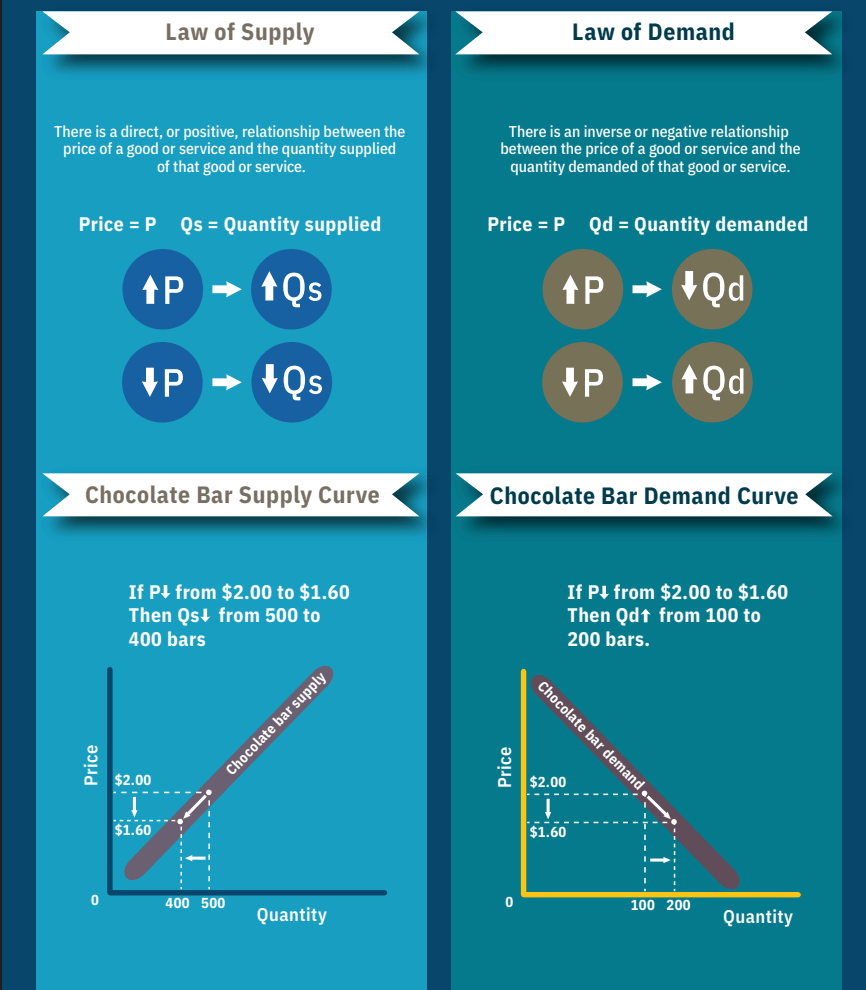
See, supply isn’t fixed. It changes based on various changes in different businesses. Economists call these shifts in supply. For example, if the cost of producing a product goes down, businesses can often make more of it, causing supply to increase. On the other hand, if materials become more expensive or a natural disaster disrupts production, supply candecrease because businesses are unable or unwilling to produce as much.
It’s the same for demand too, earlier we talked about some of these, things like new trends, income, and consumer expectations and preferences all affect why someone wanted to buy something. Because of this prices are always gonna be changing, just as supply and demand do too.
Think back to the first blog when we talked about how money moves through businesses. Companies exist because they hope to earn profits. If selling a product becomes more profitable, businesses usually try to produce more of it.
Imagine a lemonade stand. If you suddenly discover that people are willing to pay twice as much for lemonade, you would probably want to make and sell more lemonade. Businesses operate in much the same way, just on a much larger scale.
Supply and demand become most interesting when they interact.
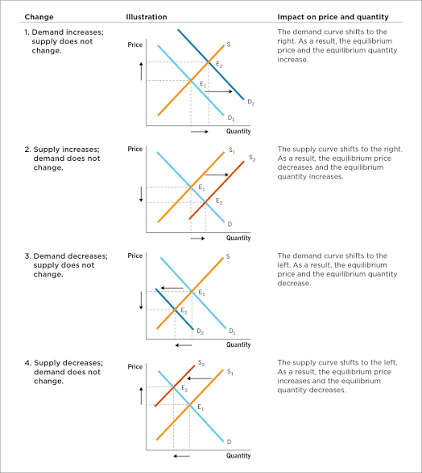
Buyers generally want lower prices. Sellers generally want higher prices. Yet somehow prices still get set every day for millions of products around the world.
The International Monetary Fund explains that prices emerge from the interaction between buyers and sellers. No single person is deciding most prices. Instead, prices are the result of countless decisions being made by consumers and businesses at the same time.
One way I think about it is as millions of tiny negotiations happening simultaneously. Every purchase and every sale helps push prices toward a level where buyers and sellers can agree.
You can see this happen in the real world.
One of the best recent examples involves eggs. In 2024 and 2025, outbreaks of bird flu led to the loss of millions of egg-laying hens across the United States. Because fewer hens were producing eggs, the supply of eggs decreased significantly.
At the same time, demand for eggs remained relatively stable because people still wanted to buy them.
According to data from the U.S. Bureau of Labor Statistics, average egg prices nearly doubled during parts of this period. What stood out to me is that the eggs themselves did not suddenly become better. They became more expensive because they became harder to find.
This highlights something important: value is not always about the product itself. Sometimes it is about scarcity.
You can see this in plenty of other places too. A bottle of water might cost a dollar at a grocery store but several dollars at a concert. Limited edition sneakers can sell for many times their original price. Certain Pokémon cards that originally cost only a few dollars can eventually sell for hundreds or even thousands.
In all of these cases, scarcity and demand play a major role in determining value.
This is one reason why prices can vary so much between different stores selling similar products.
So why should any of this matter to you?
Because prices contain information.
Every price tag tells a story. It reflects what people want, how much of something exists, how difficult it is to produce, and how much competition is involved. Understanding these signals can help you make better spending decisions, better saving decisions, and eventually better investing decisions.
The more I learn about economics, the more I realize that prices are not random. There is usually a reason something becomes more expensive or less expensive. Once you understand supply and demand, you start seeing those reasons everywhere.


Leave a comment